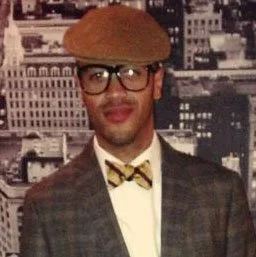
From First Competition to 2026 American AeroPress Champion
Champion Conversations, Episode 4
Newly crowned 2026 American AeroPress Champion Akira joins 2025 Champion Jeff Rambo to discuss preparing for an unknown coffee, losing his ability to taste days before the competition and trusting his work when doubt began to take over.
Akira had been working as a barista for a little over a year.
He had never entered a coffee competition.
Then he became the 2026 American AeroPress Champion.
At this year’s American AeroPress Championship, hosted by Atomic Coffee Roasters, competitors faced a new challenge: Mystery Coffee.
Brewers were given a coffee without being told its producer, origin, variety or processing method. Without that information to guide them, they had to rely on their senses, technical knowledge and ability to adapt. They had to understand what the coffee needed by tasting it—and then create the best possible cup.
For Akira, the challenge became even greater when he caught a cold during the final week of preparation and lost his ability to taste.
His first competition became a test of more than brewing ability. It became a test of whether he could trust the work he had already done when his most important tool—his palate—was suddenly unavailable.
He competed anyway.
After the final round, 2025 American AeroPress Champion Jeff Rambo sat down with Akira to discuss how he prepared, how close he came to doubting the entire recipe and what it took to push his final brew to its limit.
The conversation represents one American Champion passing the torch to the next.
Brewing Without the Answers
Coffee competitors usually begin with information.
Knowing a coffee’s origin, variety and processing method can help a brewer anticipate how it may behave. That information creates a starting point for decisions around grind size, temperature, ratio, water and extraction.
Mystery Coffee removed that advantage.
Competitors could taste the coffee, but they could not lean on its story or specifications to tell them how it should be brewed. They had to approach the cup without assumptions and allow sensory evidence to guide their decisions.
The format rewarded more than the ability to memorize a recipe.
It rewarded understanding.
Could the brewer recognize what the coffee was expressing? Could they identify what was missing? Could they adjust their approach without knowing exactly what they were working with?
The winning cup would come from the competitor who could listen most carefully to the coffee in front of them.
Preparing Before Meeting the Mystery Coffee
Akira did not wait for the mystery coffee to begin developing his approach.
He trained with coffees from different origins, varieties and processing methods. Rather than building one recipe around one predictable coffee, he experimented across a range of coffees to understand which parts of his brewing system remained reliable as the coffee changed.
Over time, he locked in two foundational decisions: his recipe and his ratio.
That gave him a repeatable structure before he began working with the competition coffee. Once the mystery coffee entered his preparation, he could focus on how it responded within that structure instead of rebuilding the entire recipe from the beginning.
This became one of the strengths of his approach.
A recipe designed for one known coffee can become fragile when the coffee changes. A strong framework gives the brewer somewhere stable to begin while their senses determine what needs to move.
Akira did not prepare by trying to guess what the mystery coffee was.
He prepared by becoming more capable of responding to whatever it might be.
Let the Coffee Tell You What It Needs
Without access to the coffee’s identity, Akira had to remove expectation from the process.
He could not decide how the coffee should taste based on its label. He had to brew, taste, adjust and repeat.
That is the real test created by Mystery Coffee.
The format asks competitors to separate what they know about coffee from what they assume about it. Technical knowledge still matters, but it must support sensory observation rather than replace it.
Each brew becomes a question:
What is the coffee already giving you?
What is the recipe hiding?
What needs to become clearer?
What should be changed—and what should be left alone?
The goal is not to force the coffee into a predetermined profile. It is to create the conditions that allow its strongest qualities to come forward.
Water Became the Final Piece
After locking in his recipe and ratio, Akira turned his attention toward water.
Water was not a minor detail in his preparation. Its mineral composition could change how the mystery coffee expressed sweetness, acidity, body, balance and clarity.
During the final week before competition, finding the right water recipe became his primary focus.
He pushed the formula, tested its limits and searched for the version that allowed the coffee to communicate most clearly. But just as those decisions became most important, his preparation was interrupted by something he could not fix with another brew.
Akira got sick.
He caught a cold and lost his ability to properly taste.
Trusting the Work When You Cannot Taste
Akira’s palate was the tool the competition format was designed to test.
Then, during the final week, he could no longer rely on it.
Doubt followed quickly.
Was the water actually improving the cup?
Was the recipe still moving in the right direction?
Could he trust decisions he was no longer able to confirm for himself?
Anyone can feel confident when each brew tastes right and every adjustment produces clear feedback. The deeper test is whether that confidence survives when certainty disappears.
Akira could not control getting sick. He could only decide whether the interruption would erase everything he had already learned.
Rather than abandoning the structure he had built, he continued working from it.
His preparation gave him something to trust when his senses temporarily could not.
The Final Recipe Came Together Just in Time
Akira finalized his water formula shortly before arriving at the competition.
There was no long period to reassure himself that it was perfect. The final piece came together close to the deadline, after a week of illness, limited sensory feedback and growing uncertainty.
He chose to trust it.
Competition can make the winning recipe look inevitable. The audience sees the final brew and the result. It does not see how close the competitor may have been to changing direction or deciding the work was not ready.
Akira’s recipe continued evolving until it was time to perform.
He brought it to Boston, pushed it to its limit and allowed the work to speak for itself.
It carried him through each round.
Then it won.
Confidence Does Not Always Come First
Akira’s story challenges the belief that people must feel completely ready before entering competition.
He had been a barista for a little over a year. It was his first coffee competition. He was working with an unidentified coffee. His final week of preparation was disrupted by illness, and his water recipe came together shortly before the event.
Nothing about the experience offered perfect certainty.
But confidence is not always what allows someone to begin. Sometimes confidence is built because they were willing to begin without it.
Entering before you feel ready does not mean entering without preparation.
Akira trained with different coffees. He created a repeatable foundation. He used his senses to understand the mystery coffee. He continued refining his water until the final moments.
He took the work seriously without waiting for doubt to disappear.
Readiness is not the absence of uncertainty.
It is having enough preparation to keep moving while uncertainty is still present.
Passing the Torch
In 2025, Jeff stood where Akira now stands as the newly crowned American AeroPress Champion.
One year later, he returned as a guest judge, brewed for guests at the Champion Brew Bar and watched the next competitor earn the opportunity to represent the United States at the World AeroPress Championship.
Then he sat down with Akira immediately after the win.
Passing the torch is not only about transferring a title. It is about preserving what one champion learned and creating space for the next person to carry the work forward.
Akira now begins a new stage of preparation. The recipe that won in Boston becomes the starting point for Worlds, where the pressure, conditions and expectations will change again.
But so will he.
Put Your Name Down
Akira’s championship journey began with a barista who had been working in coffee for a little over a year and was willing to enter his first competition.
He trained without knowing exactly what coffee he would face.
He built a flexible brewing system rather than depending on one perfect set of conditions.
He lost his ability to taste.
He doubted himself.
Then he showed up and brewed anyway.
The lesson is not that experience or preparation does not matter. His process proves the opposite.
The lesson is that preparation and uncertainty can exist at the same time.
You may not feel experienced enough.
You may not know every detail.
You may not be certain the final adjustment will work.
Sometimes the next step is still to put your name down, trust the work and see what happens.
Akira did.
Now he is the 2026 American AeroPress Champion.
Watch Champion Conversations, Episode 4: From First Competition to 2026 American AeroPress Champion